AN EVIDENCE-BASED READING OF THE VALMIKI RAMAYANA

DECODING RAMAYANA

The Science of the Epic

History. Not Mythology.

Valmiki recorded the Ramayana as itihasa — "thus it happened" — rather than as fable. When read against astronomical sky charts, satellite paleohydrology, and the metallurgical record, the text exhibits the characteristics of a document possessing a specific date, geography, and chain of command. This site lays out that case, claim by claim, along with the source behind each one.

AyodhyaChitrakootPanchavatiKishkindhaRameswaramLanka

The route the text describes: Ayodhya to Kishkindha to Lanka.

Ayodhya — Departure — exile begins

Scroll to examine the evidence

THE EPIC, FOR THOSE WHO DON'T KNOW IT

What Actually Happens

Everything below assumes you already know the plot — most sites about the Ramayana do. A lot of readers, in India and outside it, don't actually know the epic beyond fragments. Here it is, plainly, before the analysis starts.
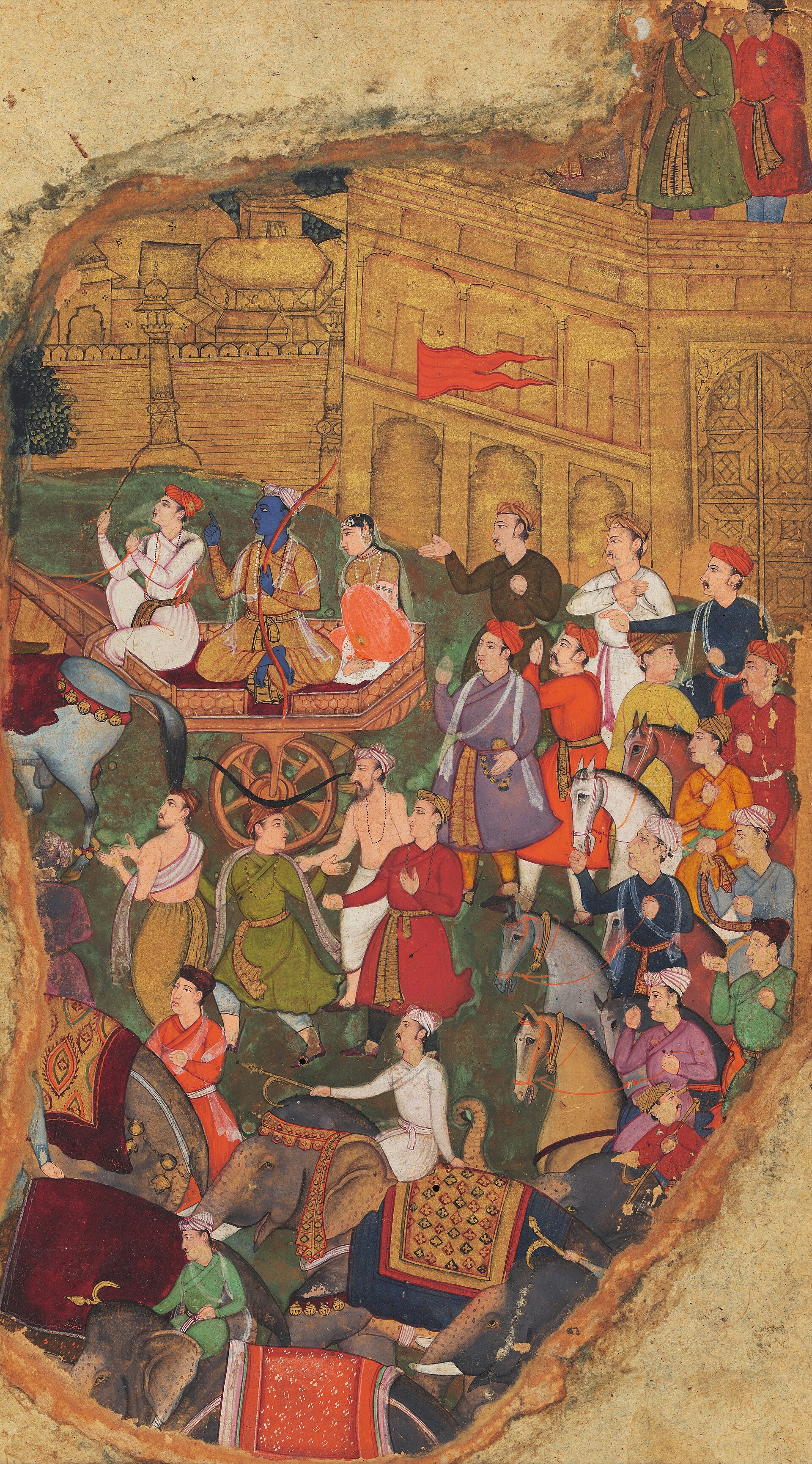
Rama, Sita, and Lakshmana leaving the palace of Ayodhya for exile — Provincial Mughal style painting, Orchha, circa 1605
Leaving Ayodhya for exile, c. 1605 — National Museum, New Delhi, public domain

Bala Kanda — The Book of Youth

King Dasharatha of Ayodhya, long childless, performs a fire sacrifice and is blessed with four sons by his three queens: Rama, Bharata, Lakshmana, and Shatrughna. Rama and Lakshmana grow up inseparable. Sage Vishwamitra takes the young Rama to defend his forest hermitage from raiding demons; Rama later travels to King Janaka's court in Mithila, strings and breaks an immense bow set as a marriage challenge, and wins Janaka's daughter Sita as his wife.

Ayodhya Kanda — The Book of Ayodhya

Years later, an aging Dasharatha moves to crown Rama as his heir. On the eve of the coronation, his youngest queen Kaikeyi — urged on by her maid Manthara — calls in two promises Dasharatha had once made her: her own son Bharata crowned instead, and Rama exiled to the forest for fourteen years. Bound by his word, the king complies. Rama accepts without protest; Sita and Lakshmana insist on going into exile with him. Dasharatha dies of grief soon after. Bharata, learning what happened, refuses the throne and rules only as Rama's regent.

Aranya Kanda — The Book of the Forest

In exile, the demoness Shurpanakha propositions Rama, is refused, and attacks Sita in anger; Lakshmana wounds her. She flees to her brother Ravana, the king of Lanka, and provokes him by describing Sita's beauty. Ravana sends the demon Maricha, disguised as a golden deer, to draw Rama and then Lakshmana away from the hermitage — and abducts Sita the moment they're gone. The vulture Jatayu, who tries to stop the abduction, is fatally wounded and lives just long enough to tell Rama what happened.

Kishkindha Kanda — The Book of Kishkindha

Searching for Sita, Rama and Lakshmana ally with Sugriva, exiled ruler of the Vanara clans of Kishkindha, whose brother Bali had driven him out and taken his wife. Rama helps Sugriva kill Bali and reclaim the throne; in return, Sugriva commits his forces — led by his minister Hanuman — to the search for Sita.

Sundara Kanda — The Book of Beauty

Hanuman leaps across the sea to Lanka, finds Sita held in Ravana's Ashoka grove, and gives her Rama's ring as proof he was truly sent. Before returning, he allows himself to be captured, sets part of Lanka alight with his burning tail, and escapes to report Sita's location back to Rama.

Yuddha Kanda — The Book of War

Rama's Vanara army marches to the southern coast. Ravana's own brother Vibhishana defects to Rama's side after failing to talk Ravana into returning Sita. Nala, son of the celestial architect Vishwakarma, directs the building of a causeway across the sea to Lanka. In the war that follows, Lakshmana is gravely wounded and saved by a Himalayan herb Hanuman fetches in time; Rama ultimately kills Ravana in single combat. Sita undergoes a public trial by fire to prove her fidelity before Rama accepts her back. With the fourteen years complete, the three return to Ayodhya, where Rama is crowned — the reign remembered as Rama Rajya.

Uttara Kanda — The Final Book

Often treated by scholars as a later addition to the text, this book covers the years after the coronation. When public rumors question Sita's purity after her time in captivity, Rama — prioritizing his subjects' confidence in the crown over his own feelings — sends the pregnant Sita to live at Sage Valmiki's hermitage, where she bears twin sons, Lava and Kusha. Raised by Valmiki and taught the Ramayana itself, the boys eventually perform the epic at Rama's own court, reuniting father and sons. Asked once more to prove her fidelity publicly, Sita calls on the earth to receive her if she has been truly faithful — and it does. Rama rules for many more years before eventually leaving the world.

Maryada Purushottama — why Rama is more than a character

In Indian tradition Rama isn't read primarily as a historical curiosity or a war hero — he's Maryada Purushottama, roughly "the ideal man within the bounds of righteous conduct" (maryada: the limits of dharma; purushottama: the best among men, from uttama purusha). That title is earned through specific choices in the epic, not just character traits: honoring his father's word even when it cost him the throne, refusing to set aside his responsibilities even in exile, and ruling by what he judged his subjects needed over his own comfort. Whether or not a reader accepts any specific historical claim on this site, this ethical dimension is a separate — and in civilizational terms probably more consequential — reason the text has been retold for millennia: as a working definition of ideal conduct in a son, a husband, and a king, not only as a chronicle of events.

The tradition doesn't treat this as uncomplicated hagiography. The Uttara Kanda's account of Sita's banishment, in particular, has been debated by commentators for centuries as the epic's hardest ethical episode — precisely because the text holds its central figure to the standard it sets, rather than exempting him from it.
ARCHAEOASTRONOMY

A Text With a Date

Valmiki logs planetary positions at specific moments — Rama's birth, the day of exile, the day of the war. Those exact configurations recur only once every few thousand years. Planetarium software can run the sky backward and check the claim.

5114 BCE

Proposed date of Rama's birth

Planetarium back-calculation popularized by researcher Pushkar Bhatnagar (Dating the Era of Lord Rama, 2004). Disputed by mainstream historians as an unfalsifiable method — see note below.

5114 BCE

Proposed date

Indus Valley Civilization

7000 BCEPresent day

At Rama's birth

Sun in Aries, Mars in Capricorn, Jupiter in Cancer, Venus in Pisces — the configuration Valmiki assigns to the ninth day of Chaitra, under the lunar mansion Punarvasu.

Valmiki Ramayana, Bala Kanda 1.18.8-9

tataḥ ca dvādaśe māse caitre nāvamike tithau | nakṣatre aditi daivatye sva ucca saṃstheṣu pañcasu | graheṣu karkaṭe lagne vākpatā indunā saha ||

Vālmīki Rāmāyaṇa, Bāla Kāṇḍa 1.18.8–9

"...then in the twelfth month, on the ninth day of Chaitra, under the star Punarvasu (ruled by Aditi), with five planets in their own exalted positions, the ascendant in Cancer, Jupiter together with the Moon..." — the moment the text assigns to Rama's birth.

The night before the coronation

Not Rama's own chart this time — Dasharatha tells Rama that astrologers have reported the Sun, Mars, and Rahu afflicting his own natal star, which the king reads as an omen and cites as his reason to rush the coronation forward by a day. That rushed timeline is what puts the ceremony on the exact day Kaikeyi is able to invoke her boons.

Valmiki Ramayana, Ayodhya Kanda 2.4.18

avaṣṭabdhaṃ ca me rāma nakṣatraṃ dāruṇair grahaiḥ | āvedayanti daivajñāḥ sūryāṅgārakarāhubhiḥ ||

Vālmīki Rāmāyaṇa, Ayodhyā Kāṇḍa 2.4.18

"O Rama, astrologers tell me that fearsome planets — the Sun, Mars, and Rahu — are afflicting my birth star."

At the war in Lanka

A third, independent sky-position claim, which proponents read as falling in the same multi-decade window as the first two.

Valmiki Ramayana, Yuddha Kanda (verse citation pending)

Mainstream historians reject this dating method: Valmiki's sky references admit more than one reading, and selecting the reading that produces a clean answer is circular. This site shows the claim and who makes it — not a settled date.

PALEO-HYDROLOGY & METALLURGY

The River and the Toolkit

A River That Stopped

ISRO and ONGC satellite imagery has mapped a dry paleochannel matching the Vedic Saraswati's described course, from the Himalayan foothills through Rajasthan to the Rann of Kutch. Tectonic shifts are thought to have diverted its Himalayan sources by roughly 1900 BCE, and the channel dried within a few centuries.

  • Paleochannel width in places exceeds 6–8 km — consistent with a major perennial river, not a seasonal stream.
  • Sediment dating in the channel brackets the drying event to approximately 2000–1500 BCE.

K.S. Valdiya Committee Report (2016) commissioned by the Ministry of Water Resources, and prior ISRO paleochannel mapping.

A Toolkit Without Iron

The text's war and farm implements are wood, stone, and copper-bronze — phalam (plough-blade) and kuddalam (mattock/spade) — with no reference to krishnayas, the later Sanskrit term for iron. That absence would place the described events before iron's spread across the Gangetic plain.

  • Iron enters the Gangetic archaeological record from roughly 1200–1000 BCE onward (Painted Grey Ware sites).
  • No krishnayas (iron) reference has been identified in the war-implement passages of the Yuddha Kanda.

loha vs. krishnayas

A common source of confusion: several English translations render loha as "iron." In Vedic and early classical Sanskrit, loha (literally "the red metal") ordinarily means copper or bronze, not iron — the dedicated term for iron is the later krishnayas ("the black metal"), which does not appear in the text's war-implement passages. Translating loha as iron reads a later metal back into an earlier text; it isn't in Valmiki's own vocabulary for this material.

H.D. Sankalia, 'Ramayana: Myth or Reality?' (1973) — Sankalia was himself skeptical of the epic's literal historicity, which makes his documentation of this absence more notable, not less. Corroborated by archaeological consensus on the Gangetic Iron Age (c. 1200 BCE) and standard Sanskrit lexicography (Monier-Williams) on loha vs. krishnayas.

THE TEXT AS RECORD

A Chronological Ledger

Two more layers of the same claim: read as a sequence, the epic's sky-references behave like dated log entries. Read against the landscape, its disaster-imagery lines up with an independently dated environmental record.

The Astronomical Ledger

The Ayodhya Kanda's sky-entries, in sequence

Valmiki doesn't log the sky once. Within the Ayodhya Kanda alone, the court records celestial conditions twice more — a dream and a formal astrological report — each tied to a specific moment in the chain of events. Set in order alongside the birth chart, they read less like poetic ornament and more like dated entries in a running record.

01Formal chartBala Kanda

Rama's birth chart

Five planets in their own exalted signs, the ascendant in Cancer, the Moon together with Jupiter, on the ninth day of Chaitra under the star Punarvasu — the ledger's opening entry, and the one modern planetarium software is used to test.

Valmiki Ramayana, Bala Kanda 1.18.8-9

tataḥ ca dvādaśe māse caitre nāvamike tithau | nakṣatre aditi daivatye sva ucca saṃstheṣu pañcasu | graheṣu karkaṭe lagne vākpatā indunā saha ||

Vālmīki Rāmāyaṇa, Bāla Kāṇḍa 1.18.8–9

"...then in the twelfth month, on the ninth day of Chaitra, under the star Punarvasu (ruled by Aditi), with five planets in their own exalted positions, the ascendant in Cancer, Jupiter together with the Moon..." — the moment the text assigns to Rama's birth.

02Dream-visionAyodhya Kanda

The king's dream, the night the coronation is announced

In the same speech where he sets the coronation, Dasharatha first describes meteors falling by daylight with a sound like thunder — a dream-vision he reports himself, offered as his own first reason to move quickly.

Valmiki Ramayana, Ayodhya Kanda 2.4.17

api ca adya aśubhān rāma svapne paśyāmi dāruṇān | sanirghātā divā ulkāś ca patanti iha mahāsvanāḥ ||

Vālmīki Rāmāyaṇa, Ayodhyā Kāṇḍa 2.4.17

"I also see, today, Rama, terrible things in a dream — meteors, thunderous and loud, falling here even by day."

03Court reportAyodhya Kanda

The astrologers' report

Immediately after, Dasharatha shifts registers and cites his court astrologers directly: the Sun, Mars, and Rahu are reported afflicting his own birth star — a second, independent entry, formally reported rather than dreamed.

Valmiki Ramayana, Ayodhya Kanda 2.4.18

avaṣṭabdhaṃ ca me rāma nakṣatraṃ dāruṇair grahaiḥ | āvedayanti daivajñāḥ sūryāṅgārakarāhubhiḥ ||

Vālmīki Rāmāyaṇa, Ayodhyā Kāṇḍa 2.4.18

"O Rama, astrologers tell me that fearsome planets — the Sun, Mars, and Rahu — are afflicting my birth star."

The text distinguishes the two registers itself — what the king dreamed, and what his astrologers formally reported — and uses both, in the same breath, to justify rushing the coronation forward by a day. That is the exact decision that puts the ceremony on the one day Kaikeyi is positioned to interrupt it: the sky-reading isn't background color, it's what moves the plot.

River and Sky, Compared

The paleochannel record next to the epic's own disaster-imagery

Two independent records, set side by side rather than merged into one. The Saraswati's drying is dated from satellite hydrology and sediment cores — physical evidence with no dependency on the text. The epic's disaster-imagery is dated only within its own narrative sequence. Neither is being used to prove the other; the comparison is what each kind of record can, and can't, tell you.

PHYSICAL RECORD

The Saraswati Paleochannel

~1900–1500 BCE

Diversion to drying, by sediment dating

ISRO and ONGC satellite imagery maps a dry channel matching the Vedic Saraswati's described course. A Himalayan tectonic shift is thought to have cut off its main source around 1900 BCE; sediment dating brackets the channel's drying to roughly 2000–1500 BCE.

K.S. Valdiya Committee Report (2016); prior ISRO/ONGC paleochannel mapping.

TEXTUAL RECORD

The Epic's Disaster-Imagery

2 passages

Ayodhya Kanda 2.4.17 and 2.69.11-13

Twice in the Ayodhya Kanda, major turning points arrive with the same cluster of images: the earth described as riven, fire extinguished without cause, mountains lost in mist, meteors falling with a sound like thunder. Both passages are explicitly framed as a dream or a portent, not neutral scene-setting — and in both cases, the loss the dream warns of is treated by the text as real and imminent.

Valmiki Ramayana, Ayodhya Kanda, Sarga 4 and Sarga 69.

These are two different kinds of evidence, not one dataset in two forms — the geology dates a river, not a king. What they share is method: both read a layer of the record most retellings skip past — river-charts and omen-verses alike — as information rather than decoration.

ANTHROPOLOGY & GEOPOLITICS

The Vanara Reality

"Vanara" splits as vana-nara — forest person. Read literally rather than pictorially, the text describes an indigenous, forest-dwelling political order in the Deccan, not a species of talking monkey.

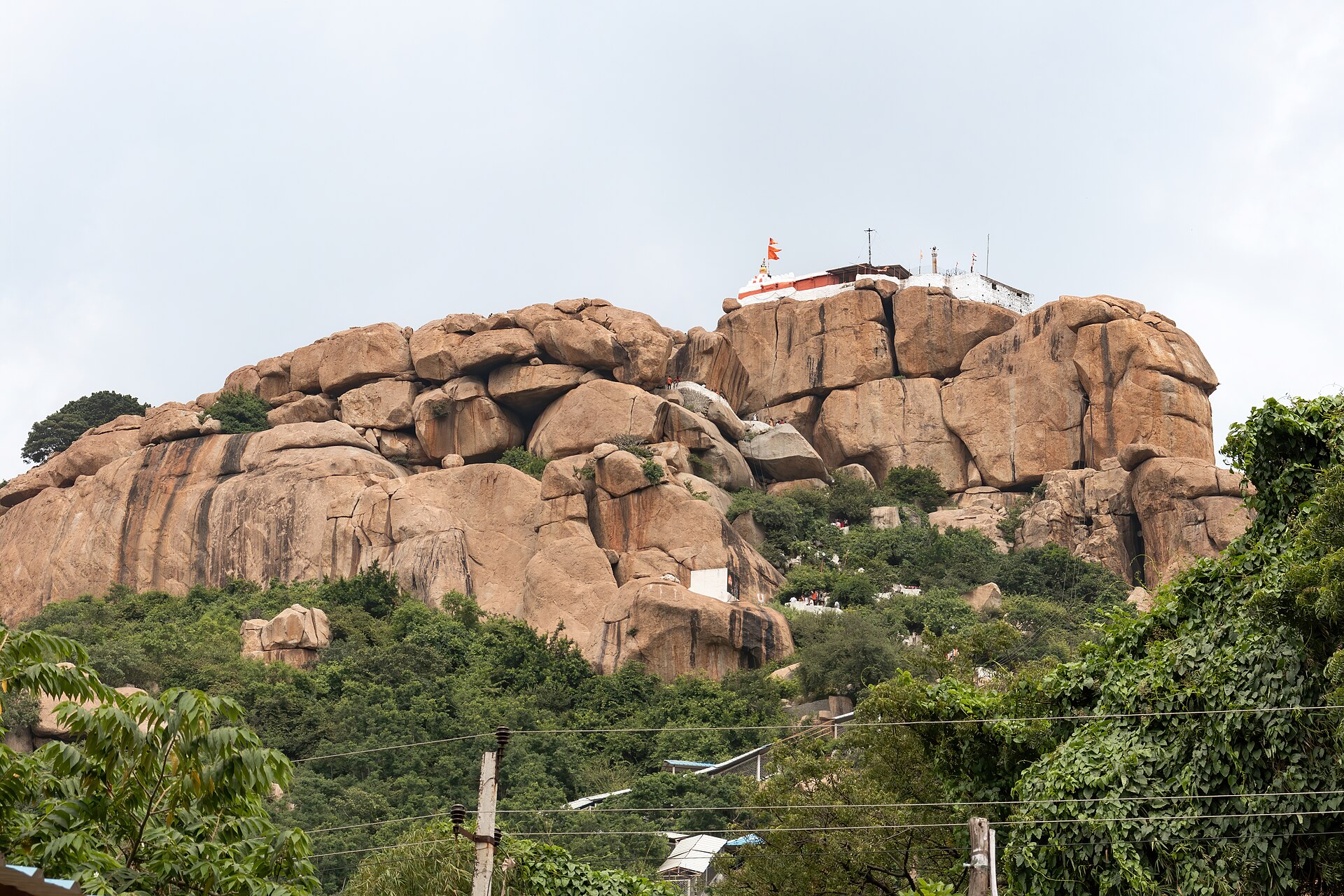
Anjanadri Hill in Hampi, Karnataka — identified in tradition as Kishkindha, birthplace of Hanuman
Anjanadri Hill, Hampi — iMahesh, CC BY-SA 4.0, via Wikimedia Commons

Clan Totems, Not Species

Vanara leaders carry animal names — Bali, Sugriva, Hanuman's father Kesari — the way clan and martial totems name people in many ancient cultures: a human lineage under an animal standard, not a literal one.

Terrain-Adapted Warfare

The campaign the text describes relies on tree cover, speed, and dispersed small units against a fortified, conventional army — the standard asymmetric playbook of a forest-based force against a garrisoned city-state.

A Named Political Order

Kishkindha is described with a capital, a succession dispute, and treaty-making authority — the structure of a polity, not a troop of animals.

The Rama–Sugriva Pact

Stripped of its poetic framing, the alliance between Rama and Sugriva reads as a bilateral military agreement: Rama helps Sugriva settle a succession dispute; Sugriva commits forces to the Lanka campaign in return — negotiated and honored on both sides.

LIVING ITIHASA

Governance & Engineering

Bridging the textual record with present-day analysis: how the epic's account of administration and engineering holds up as a case study, and how modern tools are being used to test its geography.

Engineering Wisdom of Ancient Bharat

The Yuddha Kanda's Setubandha episode describes Nala — son of the architect-deity Vishwakarma — directing a large workforce to build a causeway to Lanka using logs, boulders, and stones the text itself flags as unusual for floating, completed in five days. Read as an engineering narrative, it describes organized labor logistics and material selection at a scale the text treats as exceptional even for its own characters.

  • Named materials — trees, rocks, and floating stone — with the floating stone explicitly called remarkable within the text, not ordinary.
  • A large, organized workforce (the Vanara army) directed by a single named architect-engineer figure.

Valmiki Ramayana, Yuddha Kanda (Sarga 22).

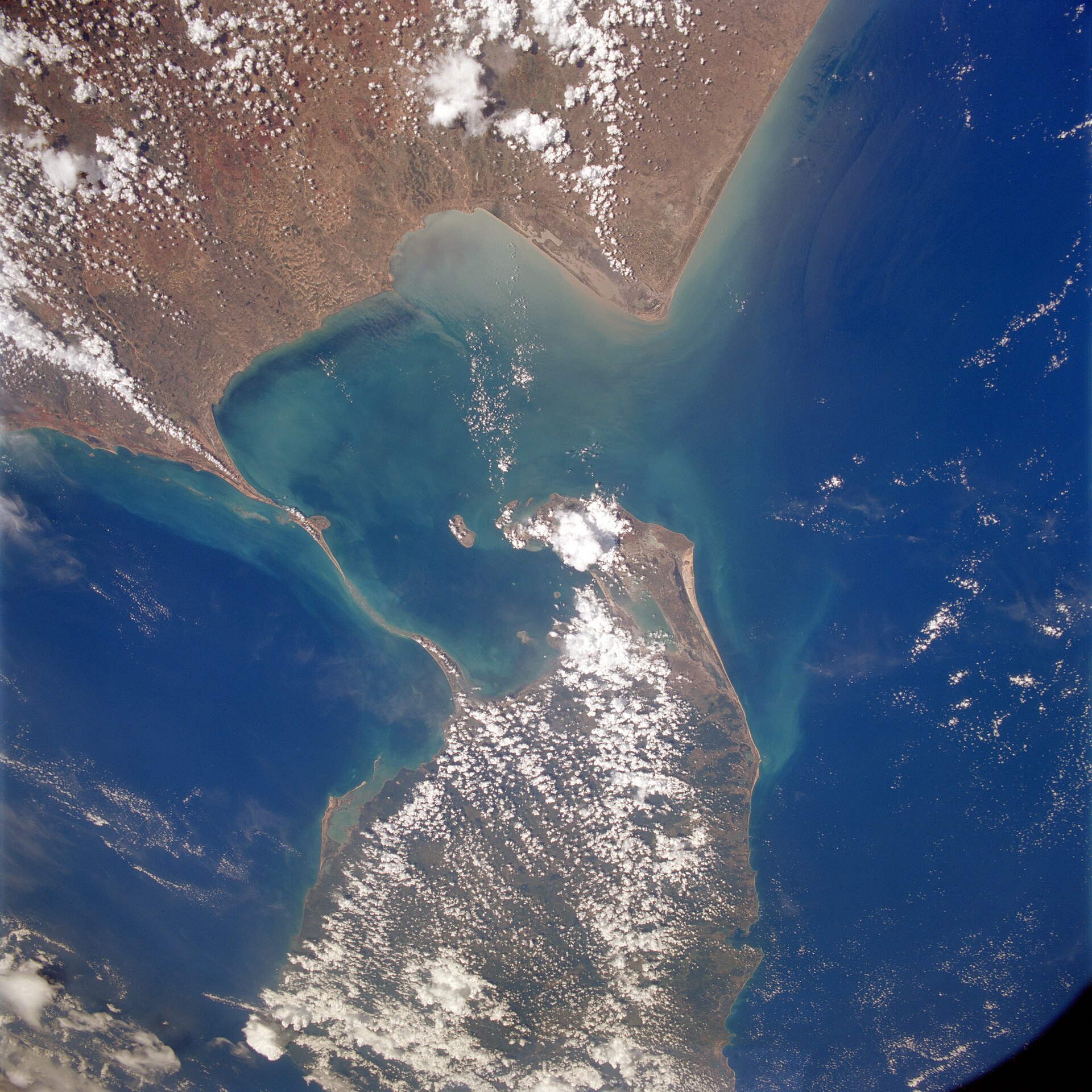
Adam's Bridge / Rama Setu, the natural limestone-and-sand shoal chain between India and Sri Lanka, photographed from Space Shuttle Endeavour
Adam's Bridge from Space Shuttle Endeavour, 1994 — NASA, public domain

Separating text from geology

This describes the text's account — not a claim about the real Adam's Bridge / Rama Setu shoal between Rameswaram and Sri Lanka. That physical formation has been studied as a natural limestone-and-sand shoal chain; India's Geological Survey has characterized it as geologically natural, not constructed. A widely circulated 2007 claim that NASA satellite imagery "confirmed" a man-made bridge was explicitly denied by NASA. This site treats the text's account and the geology as two separate things — conflating them is exactly the error an evidence-based reading has to avoid.

Statecraft & Administration

Rama Rajya, read as case study

Valmiki's Uttara Kanda and the later commentarial tradition describe a reign built on provincial governors reporting to a central court, a ruler said to have gone among his subjects incognito to check on administration directly, and revenue obligations (bali, kara) owed upward through that structure. This is a textual description, not an independently attested administrative record — there is no Ram Rajya inscription or ledger the way there is, for instance, an Ashokan edict. Read as a case study, it describes a decentralized, tributary model of kingship rather than a centralized bureaucracy.

  • Provincial governors and ministers reporting to a central court, per the text's administrative passages.
  • No corroborating inscriptions, seals, or administrative artifacts have been identified for this reign — unlike, for example, the Ashokan edicts of the later Mauryan period.

Valmiki Ramayana, Uttara Kanda administrative passages (verse citation pending). Comparison to Mauryan administration is for epistemic contrast only, not a claimed connection.

AI & Digital Heritage

The same paleochannel mapping used for the Saraswati has since been extended with machine-learning pattern recognition across satellite and radar imagery, helping researchers flag candidate dry riverbeds and settlement mounds for ground survey faster than manual interpretation alone.

  • Satellite radar (which can resolve buried channel structure) is now used alongside the earlier optical paleochannel surveys.
  • Machine-learning image classification is used elsewhere in archaeology to flag candidate sites from satellite/LIDAR imagery for human verification — the same class of tool, applied here as an emerging direction rather than a settled body of published work.

General remote-sensing archaeology methodology; specific application to Ramayana-route verification is an emerging research direction (citation pending).

SYSTEMS & ENGINEERING

The Living Itihasa

Read past the miracle framing, three threads in the epic hold up as systems: a logistics project with a measurable build rate, a political institution whose theology visibly deepens over centuries, and a communications network with working authentication.

The Setubandhana Project

A five-day, hundred-yojana causeway

Strip the Yuddha Kanda's account of Nala's bridge down to its logistics and it reads as a construction schedule: a named lead engineer, a large mobilized workforce, a materials method the text itself calls unusual, and a measurable daily build rate across five days to close a hundred-yojana gap to Lanka.

5 days

Duration

100 yojana

Total span

10 yojana

Width

Nala

Engineer of record

The daily count the text gives rises every day — 14, then 20, 21, 22, and 23 yojanas — summing exactly to the stated hundred-yojana total. Read as a build log rather than a single instantaneous act, it describes a workforce whose output climbed as the work went on.

Valmiki Ramayana, Yuddha Kanda, Sarga 22 (verses 6.22.66-70 for the daily count, 6.22.74 for the span).

Yojana built per day

14
Day 1
20
Day 2
21
Day 3
22
Day 4
23
Day 5

The Burden of Raja Dharma

From a ruling king to Purushottama

The Rama of the epic's own narration is described in office: a monarch whose Ayodhya Kanda and Uttara Kanda administration is judged, in the text's own account, by how openly he can be questioned by the subjects he serves. The tradition's recognition of him as Vishnu's avatar is a separate, later development, laid down in stages across the centuries that follow.

  • The text itself

    Rama Rajya as administration

    Valmiki's own account centers a ruler judged by provincial governance and by his answerability to his subjects — the Uttara Kanda episode that costs him Sita is framed as public accountability, not divine license.

  • c. 6th-9th century CE

    The Alvars' devotional turn

    Tamil Vaishnava poet-saints compose bhakti hymns placing Rama within Vishnu's avatars as an object of personal devotion, not only a dynastic ancestor-king.

  • c. 11th-12th century CE

    Ramanuja's Vishishtadvaita

    Systematic Vaishnava theology gives the avatar doctrine a philosophical architecture, formalizing Rama's status within a qualified non-dualist framework.

  • 16th century CE

    Tulsidas's Ramcharitmanas

    An Awadhi retelling carries Rama-bhakti to North India's vernacular audience at a scale Sanskrit courtly literature never reached, and does more than any single work to fix the popular image of Rama as god-king.

This is not a claim that the tradition invented a figure from nothing — it's a record of a real historical process: a king's political conduct, read and retold by successive generations as also a theological one, each stage building visibly on the last rather than appearing all at once.

Standard accounts of Vaishnava bhakti historiography — Alvars' dating per Tamil Vaishnava literary history; Ramanuja and Tulsidas dates per mainstream biographical consensus.

Networked Systems — The Vanaras

The search for Sita, read as a distributed protocol

Set the zoology aside. The Kishkindha and Sundara Kanda search for Sita is structured the way a dispatcher structures a search-and-rescue operation: parallel units, a chain of command, a deadline, and a credential exchanged at both ends of the mission to authenticate the parties across intermediaries who had never met.

  1. 1

    Node deployment

    Sugriva commits the Vanara forces and splits them into separate parties sent out in four directions at once, each under its own named captain — parallel search, not one party working alone.

  2. 2

    Task allocation & deadline

    Every party is given a fixed time limit to report back, with Angada and Hanuman's southern party assigned the Lanka-facing search that eventually finds the lead.

  3. 3

    Outbound authentication token

    Rama hands Hanuman his own signet ring before the party departs — a physical credential only Sita can verify, so a message relayed through intermediaries she's never met still carries proof of its true origin.

  4. 4

    Return-path authentication token

    Sita gives Hanuman her choodamani in return — the matching credential, carried back across the same channel, so Rama can verify the contact was genuine before committing an army to the crossing.

  5. 5

    Escalation near deadline

    As the southern party nears its limit without a result, Hanuman breaks from the group for a solo deep-reconnaissance run into Lanka itself — an escalation path outside the original parallel-search plan.

Valmiki Ramayana, Kishkindha Kanda and Sundara Kanda — narrative already set out on this site's Epic section.

GEOGRAPHIC & CULTURAL DIFFUSION

How Far Itihasa Travelled

The core narrative ends at Lanka. The epic didn't stop there — it was retold, translated, and locally rooted across the subcontinent and beyond, each version adapting the epic into its own language and landscape.

Deccan Plateau & Tamil, Telugu, Kannada, Malayalam traditions

By the early medieval period the epic had independent literary lives in each major Dravidian language — not translations of Valmiki's Sanskrit, but full retellings with local emphasis and invention.

Tamil

Kamban's Ramavataram

Circa 12th century; widely regarded as a literary work in its own right, not a translation.

Telugu

Ranganatha Ramayanamu

Attributed to Gona Budda Reddy; one of the earliest full Telugu Ramayanas.

Kannada

Torave Ramayana

By Kumara Valmiki; source material for the Yakshagana theatre tradition.

Malayalam

Adhyathmaramayanam Kilippattu

By Thunchaththu Ezhuthachan, circa 16th century; Ezhuthachan is widely credited as a foundational figure in written Malayalam.

Comparative Dravidian literature scholarship (e.g., Paula Richman, 'Many Ramayanas', 1991).

ONE EPIC, COUNTLESS TELLINGS

The Many Ramayanas

The core narrative this site has walked through so far is Valmiki's. It's the oldest surviving telling, but it was never the only one — across two thousand years, the same story has been rewritten by different languages, different religions, and different royal courts, each keeping the spine of the story and changing what it means.

One Story, Many Tellings

Six retellings, six different centers of gravity. Each kept Rama's exile at the core of the story and rebuilt something else around it.

Tamil · c. 12th century

Kamban's Ramavataram

Rama, divine from the first line

  • Valmiki introduces Rama as a noble prince and lets his divinity surface gradually; Kamban opens already treating him as Vishnu's avatar.
  • Adds scenes with no Valmiki equivalent — the Hiranya episode, written specifically to show devotion succeeding where philosophical argument doesn't.
  • Elevates Guha, the boatman who ferries Rama across the river into exile, into one of the poem's central models of devotion.

Kamban, Ramavataram (Kambaramayanam), c. 12th century; Tamil bhakti literary scholarship.

Awadhi (Hindi) · 16th century

Tulsidas's Ramcharitmanas

The version most of North India actually knows

  • Written so the story could reach people shut out of Sanskrit learning — the single biggest reason the Rama story is still a living, spoken tradition across North India, not a text read only by scholars.
  • Structured as a devotional dialogue between Shiva and Parvati from its first verse, not a court chronicle.
  • Is the specific text almost every Ramlila performance in North India stages, nearly 500 years after it was written.

Tulsidas, Ramcharitmanas, 16th century.

Bengali · c. 15th century

Krittivasi Ramayan

A folk register, and a different center of gravity

  • Told in a plainer, more colloquial Bengali register than Valmiki's formal Sanskrit or Tulsidas's devotional Awadhi.
  • Leans further into Sita's own interiority and her relationship with Rama than into battlefield narrative.
  • Drops the caste-duty framing Valmiki and Tulsidas both anchor in Vedic authority — a doctrinal difference, not just a stylistic one.

Krittibas Ojha, Krittivasi Ramayan, c. 15th century; comparative studies of Ramarajya across Valmiki, Tulsidas, and Krittibas.

Prakrit · Jain tradition

Paumachariya

Ravana as a devout, cultured king undone by one flaw

  • Vimalasuri's telling — one of the oldest surviving Ramayana retellings outside the Sanskrit mainstream — presents the Lankan rakshasas not as demons but as a civilized, Jain-observant people, Ravana himself a Jain devotee and protector of Jain shrines.
  • Sita's fire ordeal doesn't appear at all. Instead, Sita renounces the world and becomes a Jain ascetic.
  • Reflects Jain cosmology's own framework for a figure like Rama, distinct from the Hindu Vishnu-avatar framework.

Vimalasuri, Paumachariya (Paumacariya); Jain textual tradition on Rama.

Pali · Buddhist Jataka canon

Dasaratha Jataka

No war. Rama and Sita are brother and sister.

  • Casts the story as one of the Buddha's own past lives — Rama-Pandita, a bodhisattva-in-training — and drops the entire second half of the epic most retellings center on.
  • No abduction, no Ravana, no Hanuman, no war. Sita accompanies Rama and Lakshmana into exile as their sister, not as Rama's wife.
  • Reframes the whole story as a parable about grief and non-attachment after a father's death, not a rescue epic.

Dasaratha Jataka (Jataka No. 461), Pali Buddhist canon.

Thai · composed under Rama I, late 18th c.

Ramakien

A national epic that adds a whole new love story

  • Valmiki's Hanuman is composed and celibate. The Ramakien's Hanuman is a flirtatious shapeshifter — the single most beloved figure in Thai classical art.
  • Adds a romance with no Valmiki equivalent: Hanuman falls for Suvannamaccha, a mermaid who is Ravana's own daughter, and has a son with her.
  • Thailand's kings have taken the regnal name 'Rama' since the dynasty founded in 1782 — the current king is Rama X.

Ramakien, composed under King Rama I; Thai performing-arts scholarship on Hanuman's characterization.

Even inside Hindu tradition, the story branches

The variation isn't only across religions and regions. Several Puranic texts — the Adbhuta Ramayana and the Devi Bhagavata Purana among them — tell the abduction itself differently: before Ravana arrives, Rama and Sita already know what's coming, and Agni hides the real Sita within his own realm, leaving an illusory double — Maya Sita, or Chaya Sita, "shadow Sita" — to endure the captivity in her place. In this telling, the fire at the war's end isn't a trial by ordeal; it's the moment the real Sita and her shadow change places back.

Adbhuta Ramayana, Devi Bhagavata Purana, and related Puranic sources on the Maya Sita/Chaya Sita tradition.

The Cultural Footprint

The story didn't just get retold — it built theatre traditions, calendar festivals, and city names that are still in daily use, centuries later, in multiple countries.

PERFORMING ARTS

Ramlila

UNESCO 2008

North India

Tulsidas's Ramcharitmanas staged as a multi-night public performance every autumn, across hundreds of towns.

Kutiyattam

UNESCO 2001

Kerala

A 2,000-year-old Sanskrit theatre tradition — among the oldest continuously performed in the world — that stages the Ramayana across three integrated classical plays.

Wayang Kulit

UNESCO 2003 / 2008

Java & Bali, Indonesia

Shadow-puppet theatre drawing on the Ramayana and Mahabharata alike, performed against a lit screen to live gamelan music.

Khon

UNESCO 2018

Thailand

Masked dance-drama performing the Ramakien, cultivated at the Thai royal court for centuries.

Lakhon Khol

UNESCO 2018

Cambodia

An all-male masked dance tradition that performs nothing but the Reamker, kept alive by a single village troupe near Phnom Penh.

FESTIVALS & EVERYDAY LIFE

Dussehra / Vijayadashami

India

Marks Rama's victory over Ravana; giant Ravana effigies are built and burned in public across North India every year.

Diwali

UNESCO 2024–25

India & the global Indian diaspora

Marks Rama, Sita, and Lakshmana's return to Ayodhya after fourteen years' exile — the 16th Indian tradition inscribed on UNESCO's Intangible Cultural Heritage list.

Ayutthaya

Thailand

Thailand's former royal capital, founded 1351, is named directly after Ayodhya — Bangkok's full ceremonial name still carries "Ayutthaya" inside it today.

COMPARATIVE PHILOLOGY

The NLP Atlas

Three traditions describing the exact same event — Rama's birth — within a handful of lines each. Set side by side, the vocabulary shift alone tells you what each text thought this moment was for.

Valmiki

Sanskrit

The root text

Astrological record

tataḥ ca dvādaśe māse caitre nāvamike tithau | nakṣatre aditi daivatye sva ucca saṃstheṣu pañcasu | graheṣu karkaṭe lagne vākpatā indunā saha ||

"...then in the twelfth month, on the ninth day of Chaitra, under the star Punarvasu, with five planets in their own exalted positions, the ascendant in Cancer, Jupiter together with the Moon..."

Vālmīki Rāmāyaṇa, Bāla Kāṇḍa 1.18.8–9

No mention of divinity anywhere in the verse. The moment is logged as a set of coordinates — five planets, a lunar mansion, an ascendant — the same register the text uses for every other dated claim on this site.

Kamban

Tamil

c. 12th century

Cosmic framing

"[She] gave birth to a child, who kept the world safe during the time of final deluge, by keeping it in his belly, and who is the one who cannot be understood by the Vedas."

Kamban, Ramavataram, Bala Kandam, Thiruvavathara Padalam, v.282 (trans. P.R. Ramachander)

Rama is identified with Vishnu's cosmic role — the god who held the world safe through the deluge — in the same verse that reports his birth. Valmiki takes the rest of the epic to arrive anywhere near that framing, if he arrives at it explicitly at all.

Tulsidas

Awadhi

16th century

Devotional celebration

भए प्रगट कृपाला दीनदयाला कौसल्या हितकारी। हरषित महतारी मुनि मन हारी अद्भुत रूप बिचारी॥

"The merciful one, kind to the humble, has appeared for Kaushalya's sake. The mother rejoices; the minds of sages are captivated; his form is a wonder to behold."

Tulsidas, Ramcharitmanas, Balkand, doha ~192 (verse numbering varies by edition)

The register here is neither clinical nor cosmological — it's personal and emotional, staged as something a mother and a room full of sages are reacting to in real time.

Same event, three different jobs for the sentence describing it: Valmiki is logging a timestamp, Kamban is making a theological claim, Tulsidas is staging a feeling. None of the three is lying about what happened — they disagree about what the birth was *for*.

DIGITAL EPIGRAPHY

The OCR Pipeline

The manuscripts behind a text like this one aren't infinite. Palm-leaf degrades, ink fades, and most of what survives has never been read by anyone alive today. This is the real pipeline currently used to get ahead of that clock — described here as a field, not yet run against a specific source manuscript for this site.

~5,000,000

Manuscripts estimated to survive in India

National Mission for Manuscripts (NAMAMI), Ministry of Culture

~3.5 lakh

Digitized so far

covering roughly 3.5 crore (35 million) folios

NAMAMI

Thiruvananthapuram, Kerala

Largest single palm-leaf collection

70,000+ works, ~44,000 of them in Sanskrit

Oriental Research Institute & Manuscripts Library, University of Kerala

1

Multispectral imaging

High-resolution cameras — up to 39 megapixels in published setups — photograph a leaf under a sequence of wavelengths from ultraviolet through infrared (roughly 365–1050nm). Ink and pigment faded past the point of being legible to the eye often still absorb or reflect light differently from the material around them at some specific wavelength.

Multispectral imaging research on Sanskrit palm-leaf and Tibetan paper manuscripts.

2

Layout segmentation

Before any character can be read, the page itself has to be parsed — separating text lines from illustrations, damage, and margin. Indiscapes, a 2019 dataset and deep-learning system built specifically for historical Indic manuscripts, uses a fully convolutional network trained to do this automatically.

Indiscapes (2019), instance-segmentation research on historical Indic manuscript layout.

3

Character recognition

Historical scripts are the hard case for OCR: Grantha, old Tamil, and Brahmi-derived scripts have far less training data available than modern printed text. Neural-network classifiers built specifically for this have reported accuracy above 91% recognizing Brahmi characters from palm-leaf — real progress, but still short of what a modern printed-page scanner achieves.

Neural-network research on Brahmi and Tamil palm-leaf character recognition.

4

Human verification

No automated stage above is treated as final. Every machine pass on a manuscript this old is checked against the physical leaf by a person who reads the script — the same discipline this site tries to apply to every other claim it makes.

Nothing above has been run against a specific manuscript for this site yet — that's real, unstarted work, not a claim already made. What's described is the actual state of the field: this is genuinely how texts like this one get read today, not a hypothetical pipeline.

WHAT'S NEXT

In Development

Two modules structurally scaffolded ahead of the research they'll need. Nothing below is a claim — every number and dataset shown is a placeholder until it's sourced and verified the same way everything else on this site was.

Seismic & Tectonic Logs

Geology

Structure only — no dataset identified yet

Planned: the text's storm- and earth-imagery set next to real Holocene fault-line and seismic data, the same two-independent-records approach used for the Saraswati comparison — only where a real dataset can actually be cited.

Textual description

Dataset pending

Geological record

Dataset pending

Proto-Embryology & Physiology

Textual medicine

Structure only — unconfirmed whether the text supports this reading

An open question, not yet a finding: whether any physiological detail in the birth narrative holds up as more than ritual description. Valmiki's own account is a putrakameshti yagna — a ritual offering — not an anatomical one; this module stays empty until real textual evidence says otherwise.

Stage 1
Stage 2
Stage 3
Stage 4

No verified textual evidence yet